
 Save
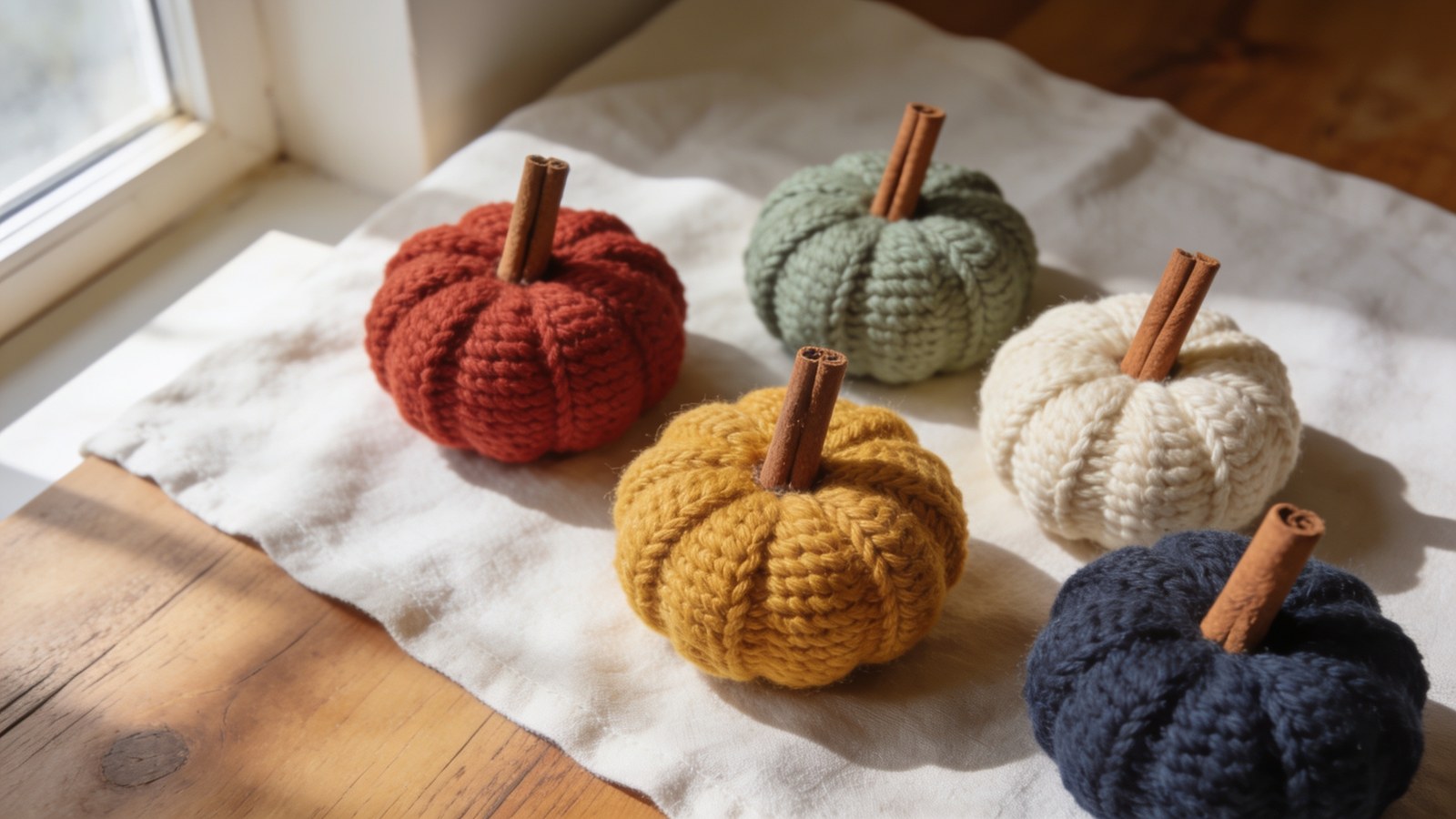
SaveA crochet pumpkin starts as a stuffed ball, which is the easy part. What makes it a pumpkin rather than an orange is the segmenting: yarn pulled tightly from the bottom through the centre to the top, five or six times, dividing the surface into ribs.
Part of our seasonal library.
Do that with a long doubled length of the same yarn and a bent needle, pull harder than feels reasonable, and the shape changes completely. Skip it and you have a ball with a stem.
The other thing that matters is the stem. A crocheted stem always looks slightly like a hat. A real cinnamon stick, a twig from the garden or a rolled scrap of brown felt looks better than anything you can make with a hook, and takes no time at all.
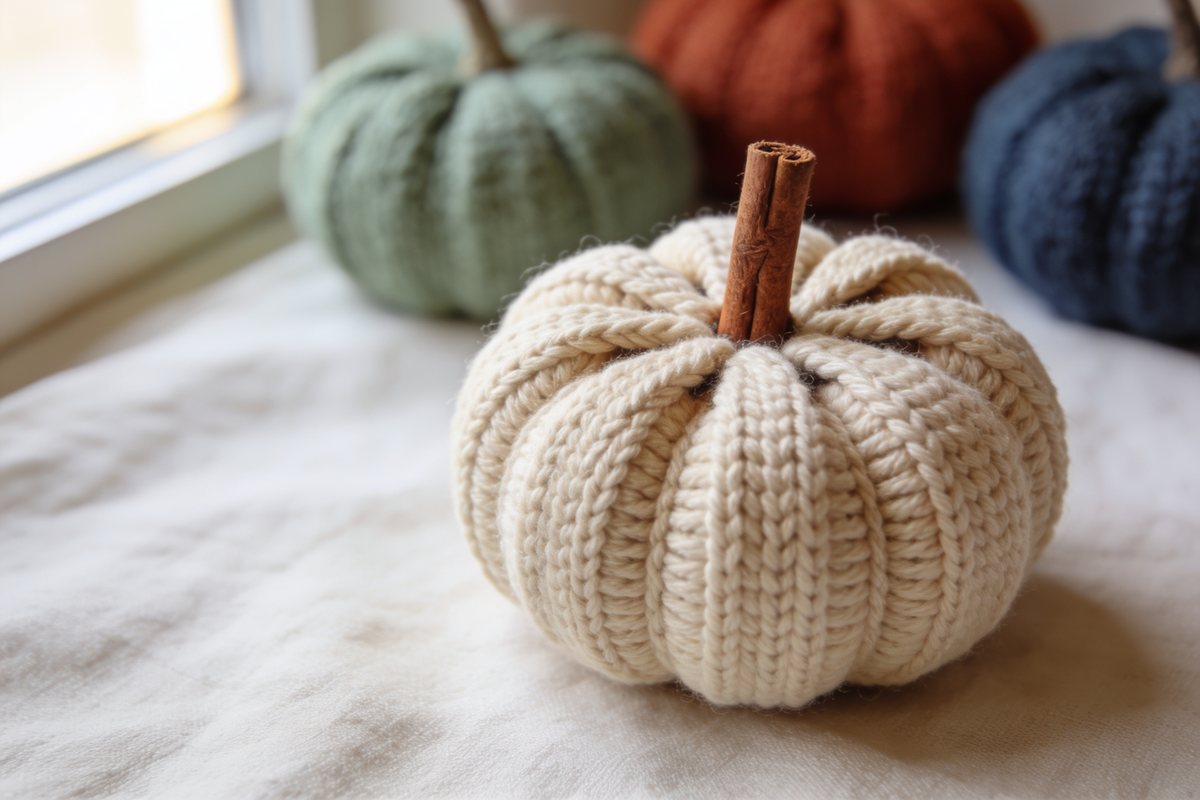
Classic ribbed pumpkin
Beginner1 hour
Stuffed ball with six segments pulled in and a cinnamon stick stem. The one to start with.
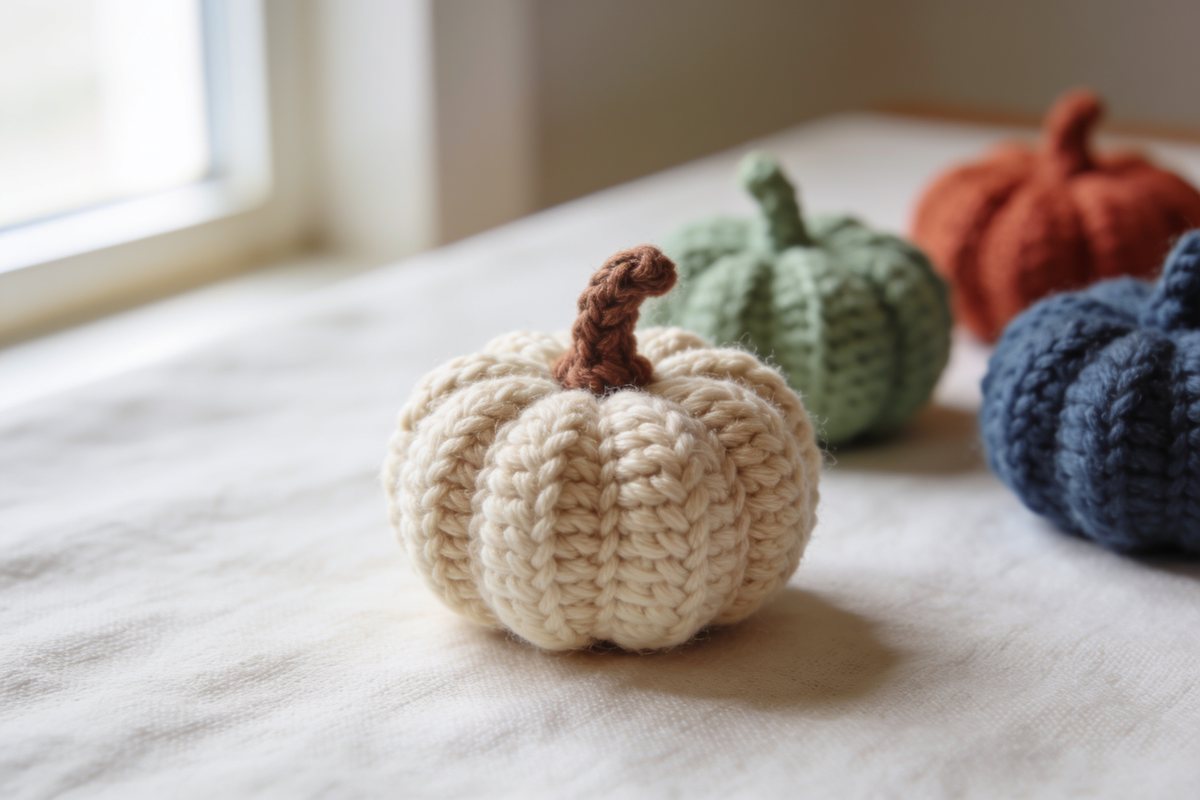
Mini pumpkin, 5 cm
Beginner30 min
Table scatter. Make nine in an evening.
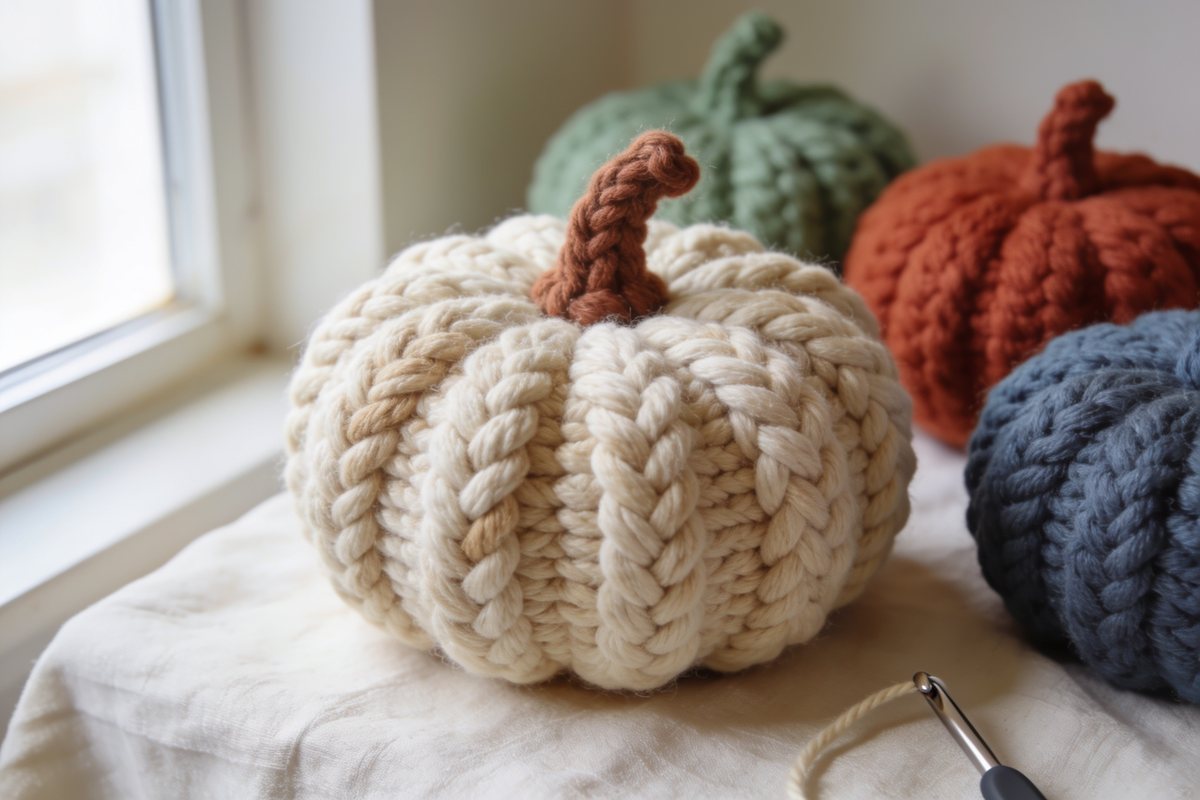
Chunky bulky pumpkin
Beginner45 min
Super bulky yarn on a 9 mm hook. Twice the size, half the time.

Tall gourd
Easy1 hour 15
More rounds worked straight before decreasing, so it stands rather than sits.
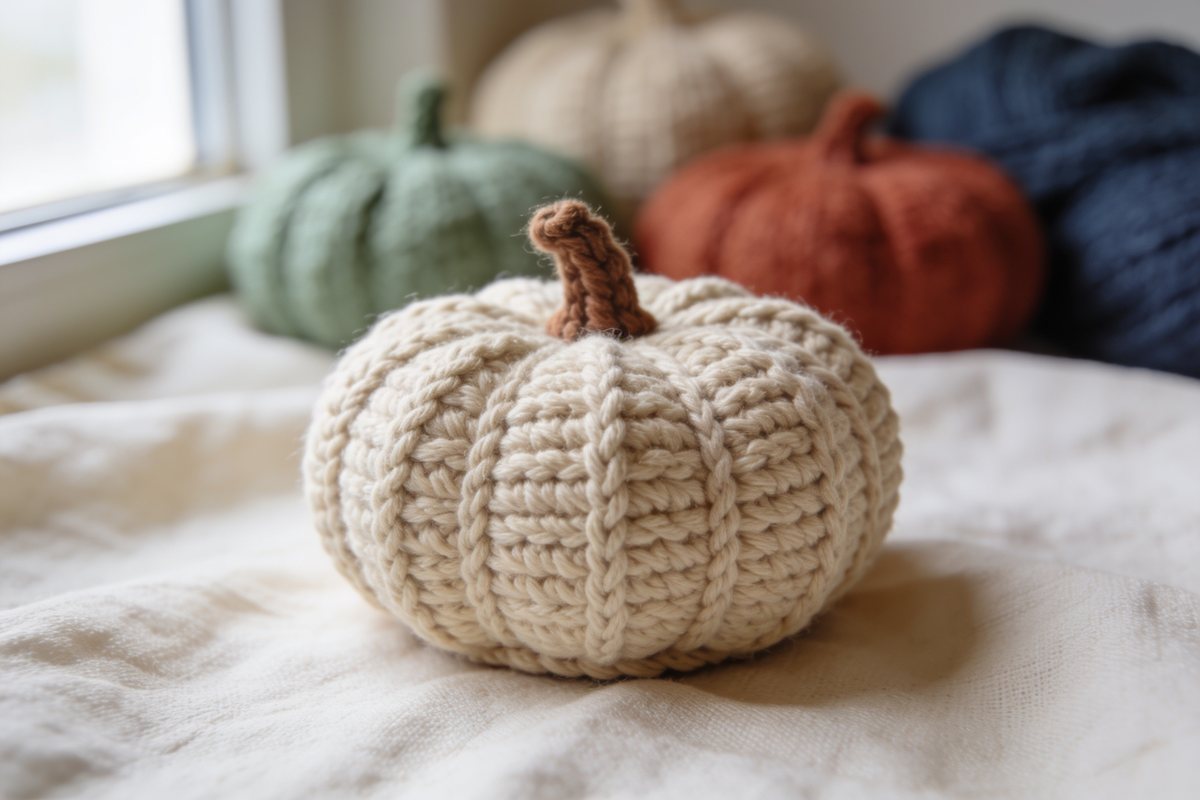
Flat-bottomed pumpkin
Beginner1 hour
Worked with a flat base so it does not roll off a shelf.
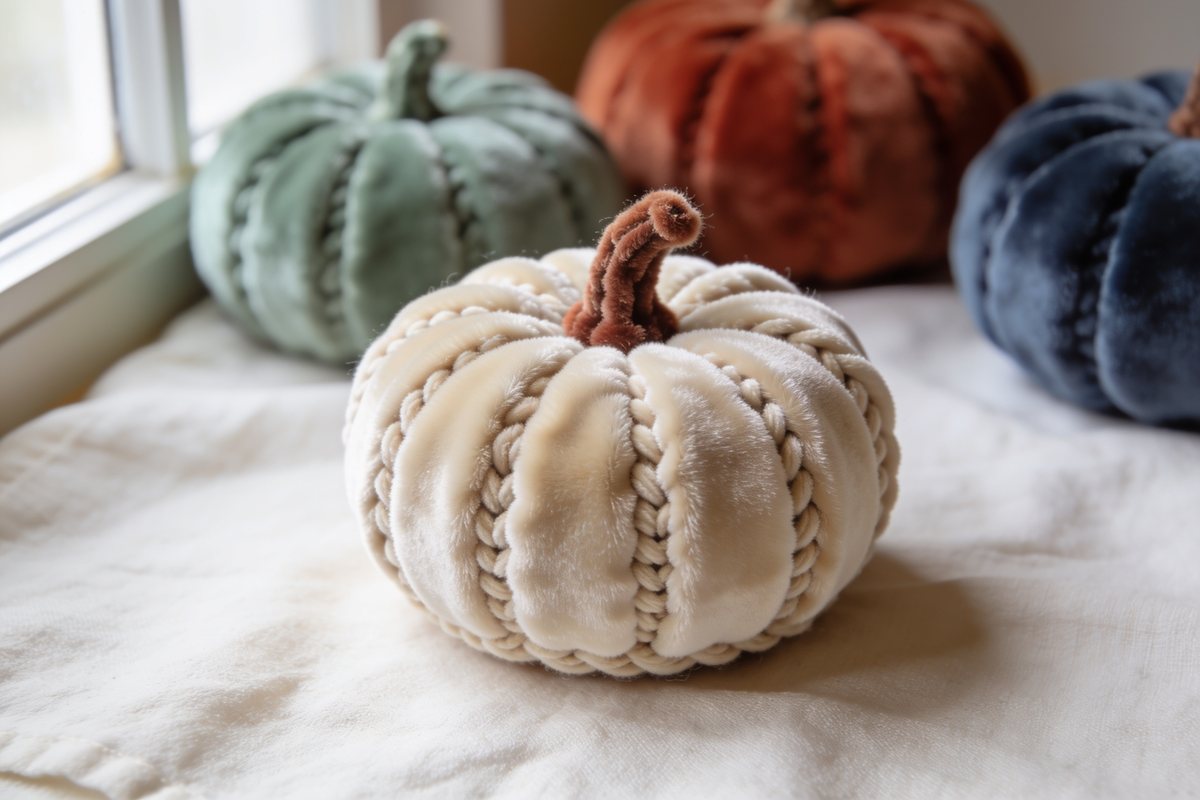
Velvet yarn pumpkin
Beginner1 hour
Chenille yarn hides all stitch definition, which is exactly right here.
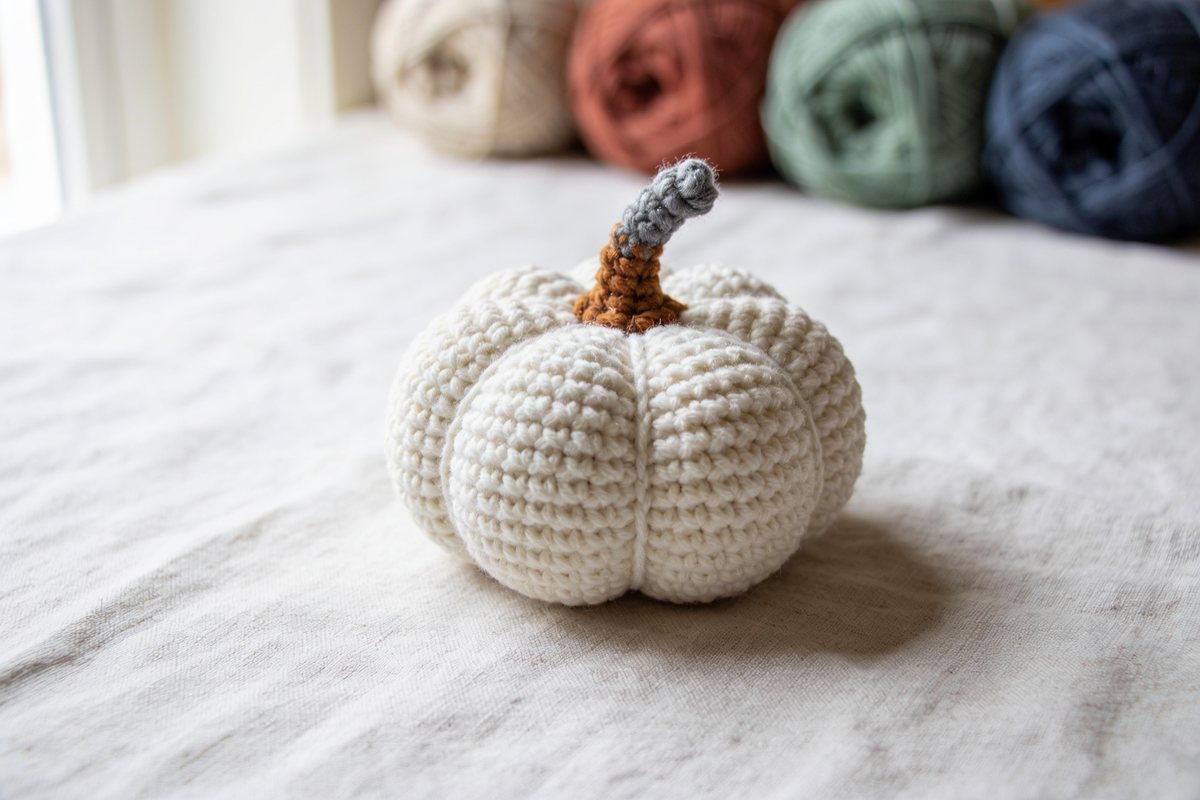
White heirloom pumpkin
Beginner1 hour
Cream with a grey-brown stem. Looks more expensive than orange.
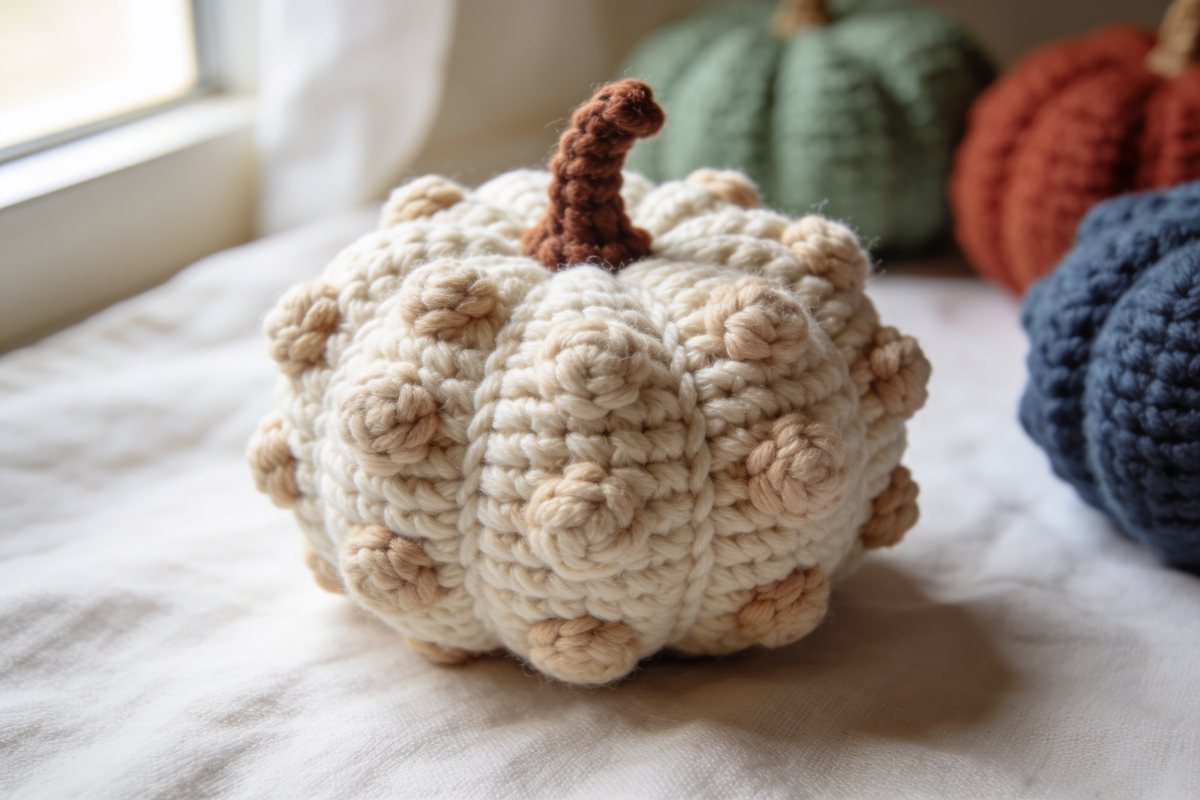
Textured bobble pumpkin
Easy1 hour 30
Bobbles on alternate rounds for a warty gourd surface.
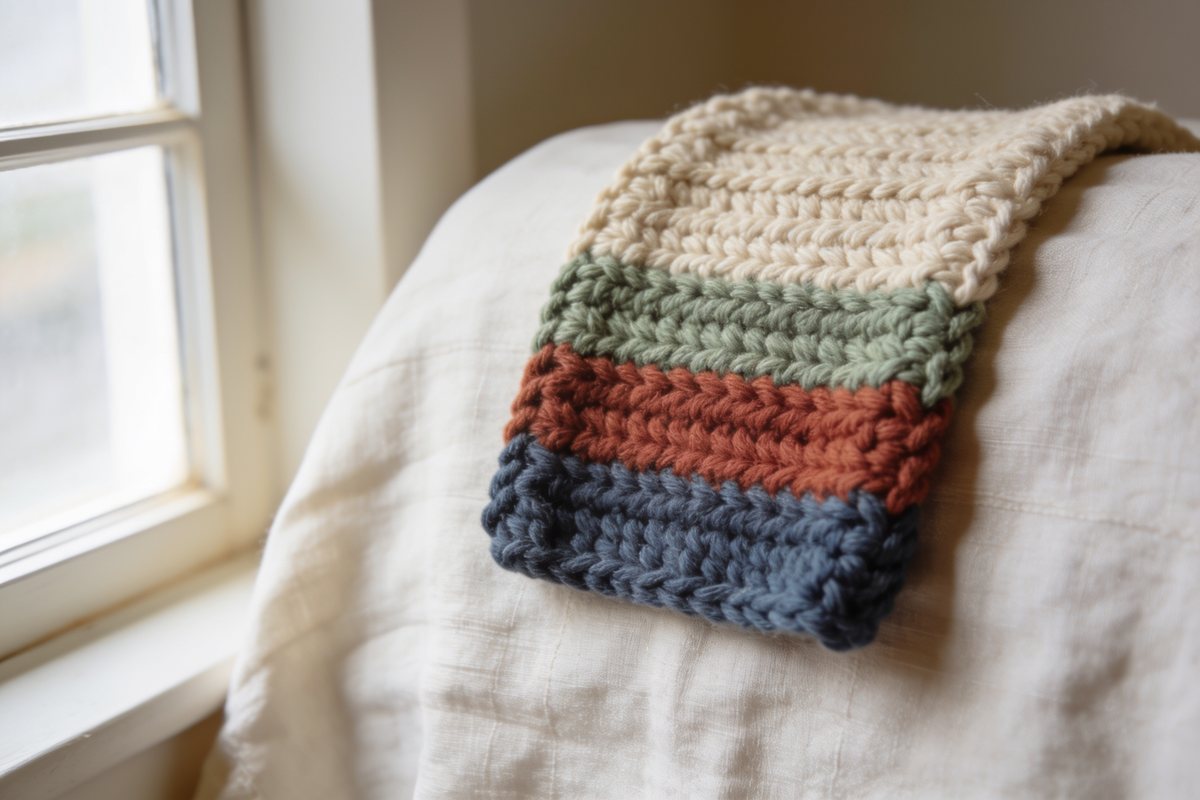
Striped two-tone
Easy1 hour 15
Alternating segments in two colours, which needs planning before the first round.
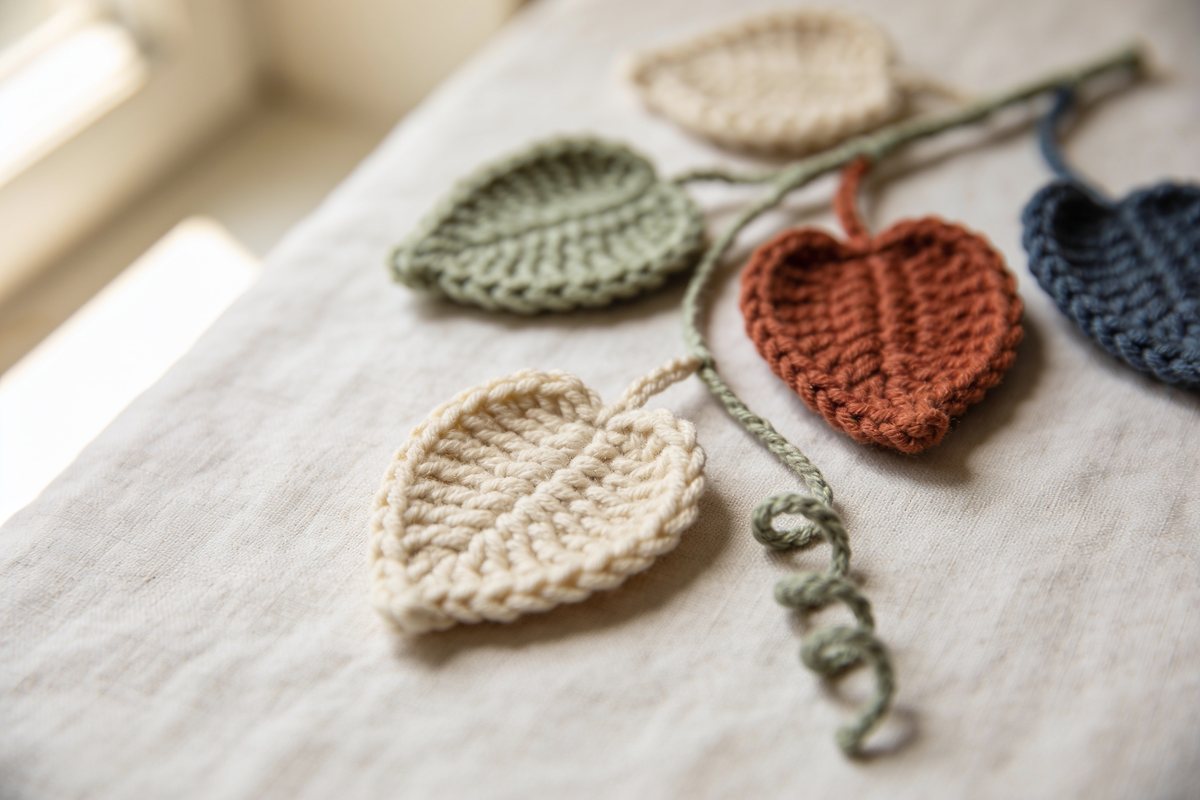
Leaf and tendril set
Easy45 min
The accessories, made separately. A curled tendril is a chain worked with three stitches into each stitch.
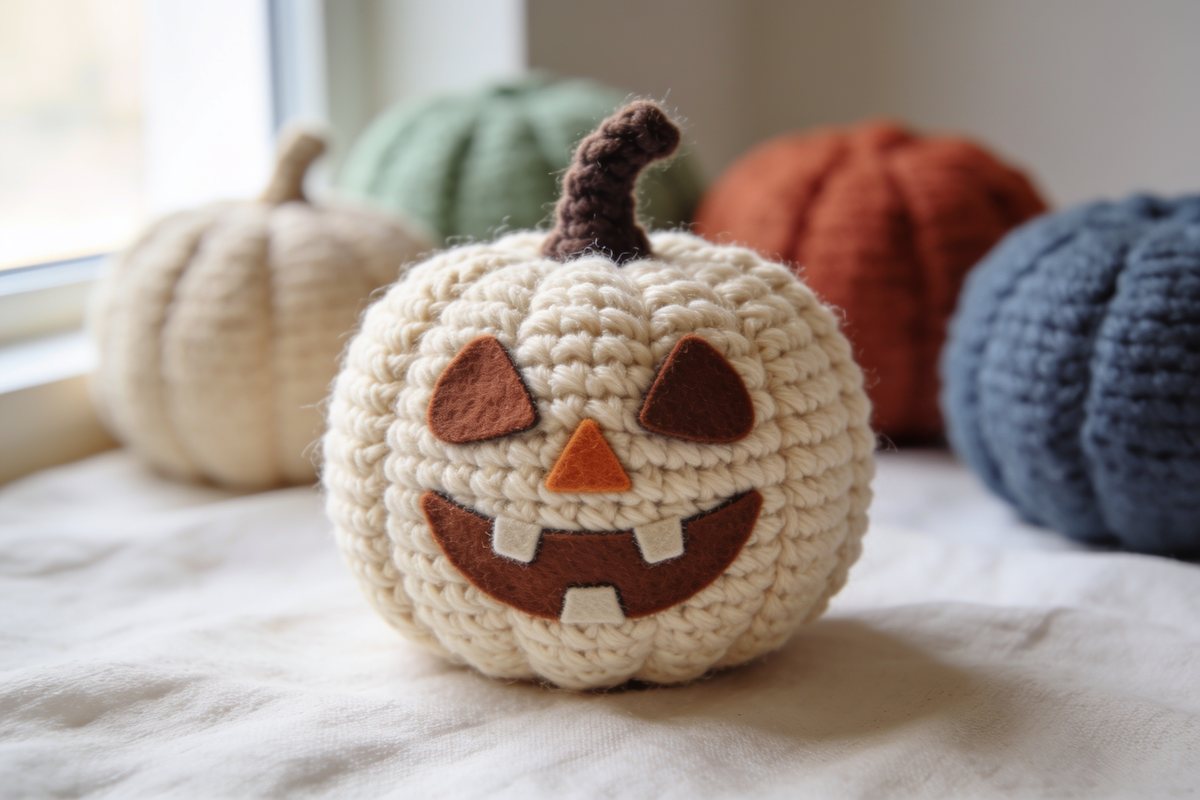
Jack-o-lantern face
Easy1 hour 30
Felt face pieces glued on rather than embroidered, so it comes off in November.
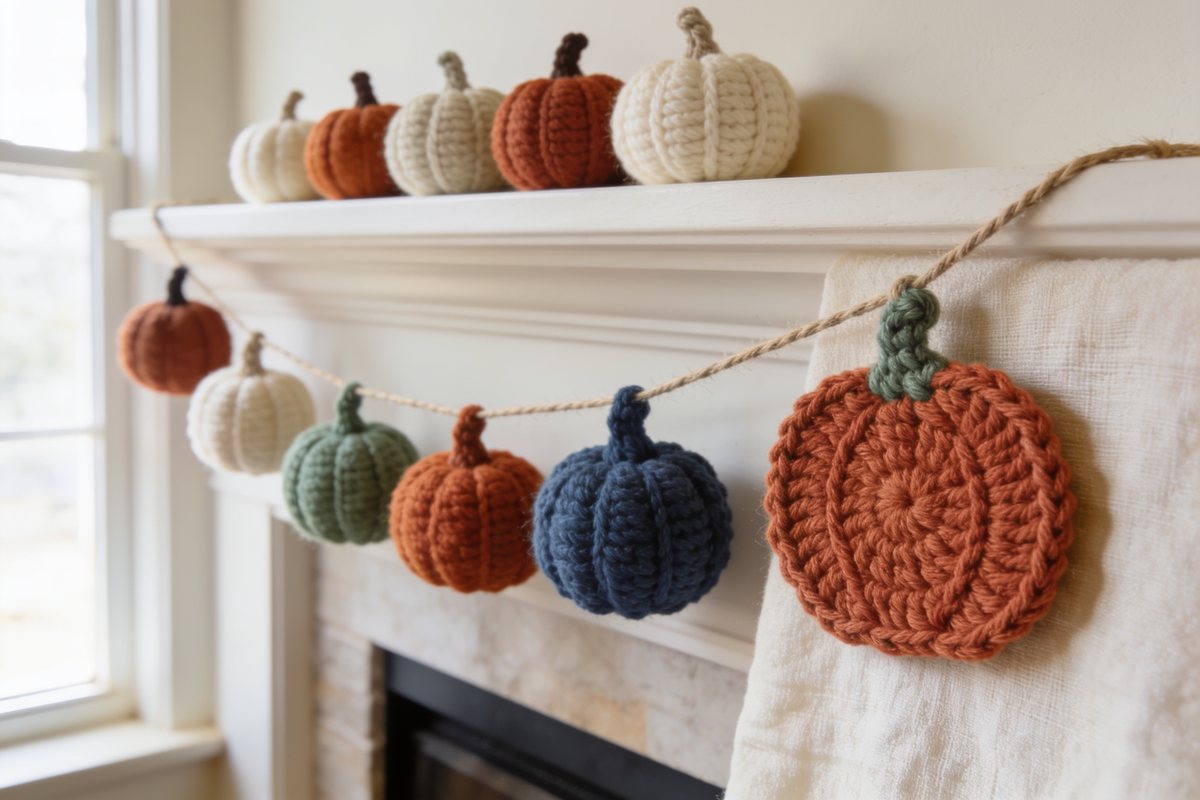
Pumpkin garland
Easy2 hours
Seven mini pumpkins on twine along a mantel.

Giant floor pumpkin
Easy2 hours
Six strands of worsted held together on a 12 mm hook. Ends up about 35 cm across.
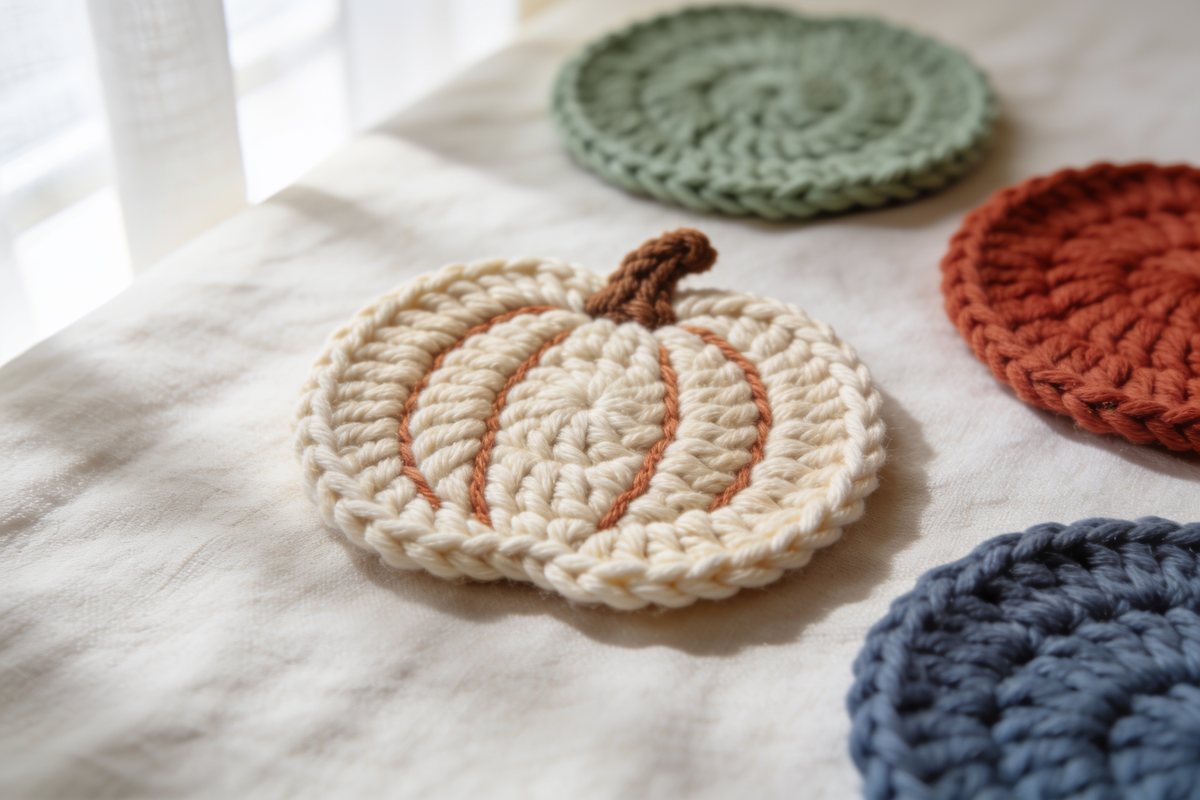
Pumpkin coaster
Beginner30 min
Flat, in the shape rather than the round. Functional through October.
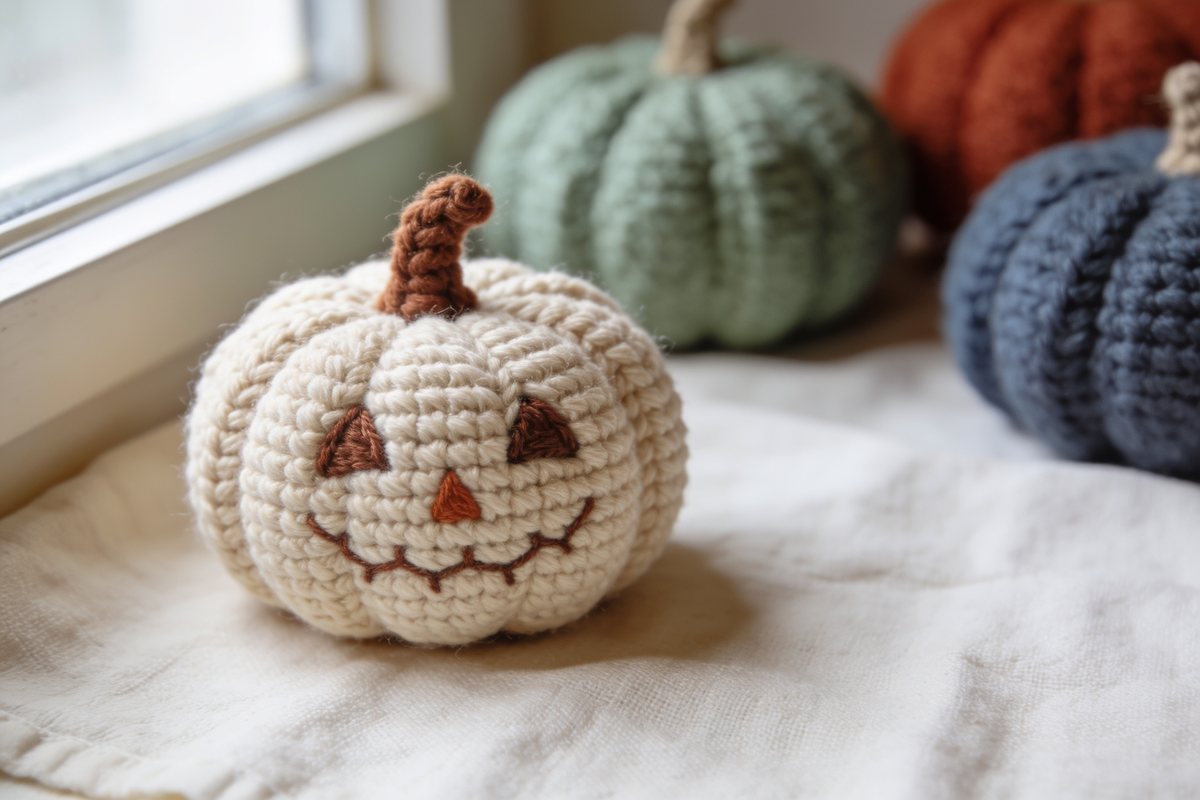
Amigurumi pumpkin with a face
Easy1 hour 30
Embroidered features, safety eyes only for a household with no small children.
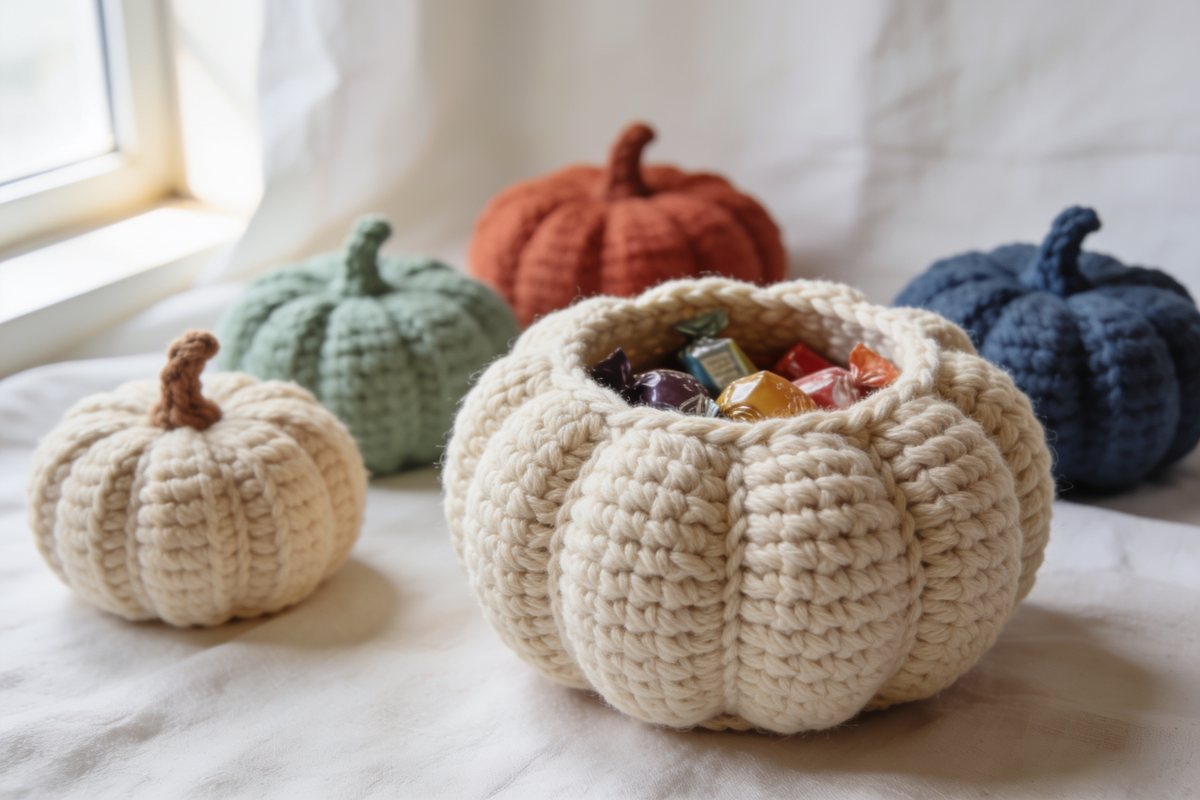
Pumpkin basket
Intermediate2 hours
A stiff bowl in pumpkin shape that holds sweets. Doubled cotton, worked tight.
Segmenting, which is the whole thing
Thread a long doubled strand on a bent tapestry needle. Go in at the bottom centre, up through the stuffing, out at the top centre, then down the outside and back in at the bottom. Pull firmly. Repeat evenly around.
| Pumpkin size | Segments | Pull tension |
|---|---|---|
| Mini, 5 cm | 4 | Gentle, it distorts easily |
| Standard, 12 cm | 6 | Firm |
| Large, 20 cm | 8 | Very firm, it will not look wrong |
| Giant, 35 cm | 8 | As hard as the yarn allows |
Stuff more firmly than feels right before segmenting. The pulling compresses the middle, and a lightly stuffed pumpkin ends up looking deflated once the ribs go in.
Questions
How do you make crochet pumpkin ribs?
Thread a long doubled strand through the centre from bottom to top, then down the outside and back in at the bottom, six times around. Pull firmly each time.
What yarn is best for crochet pumpkins?
Worsted acrylic for shape, or chenille velvet yarn if you want softness and do not mind losing stitch definition.
What can I use for the stem?
A cinnamon stick, a garden twig or rolled brown felt. All three look better than a crocheted stem and take no time.
How much yarn does a pumpkin take?
About 30 grams for a 12 cm pumpkin, or 250 grams for a giant floor one in held-together strands.
Why does my pumpkin look like a ball?
It has not been segmented, or it was not pulled tight enough. The ribs are what make the shape.
Can I make these without stuffing?
Use fabric scraps or a small ball of waste yarn inside. Polyester stuffing gives the best shape but anything soft works.