Stitches·Step by step
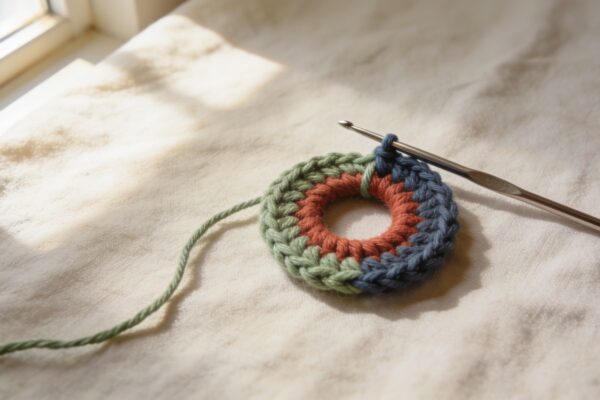
Magic Ring Crochet: How to Make One That Never Slips
The adjustable loop that closes the centre of anything worked in the round, and how to stop it...
Beginner10 min to learn
One page per stitch, worked slowly, including the mistakes that make it look wrong.
There are only six stitches you need. Everything else in crochet is those six in a different order, worked into a different part of the stitch below, or repeated a set number of times. Once that clicks, patterns stop being code.
Chain, slip stitch, single crochet, half double, double and treble. That is the whole vocabulary. A pattern that looks intimidating is almost always double crochet with the hook going somewhere slightly unusual: into the back loop only, around the post of the stitch below, or into a space rather than a stitch.
Each page below works one stitch at normal speed, then works it again wrong on purpose, because recognising the mistake is what stops you frogging six rows at midnight.
In the order they are worth learning. Do not skip slip stitch, it does more jobs than anyone expects.
Not harder, just unfamiliar. Each one unlocks a whole category of pattern.
Height is how tall one row stands. Yarn use is relative to single crochet at 100.
| Stitch | Abbrev | Height | Yarn use | Best for |
|---|---|---|---|---|
| Single crochet | sc | Short | 100 | Amigurumi, bags, anything that holds shape |
| Half double | hdc | Medium | 115 | Hats, scarves, the all-rounder |
| Double | dc | Tall | 120 | Blankets, garments, covering ground |
| Treble | tr | Very tall | 140 | Open lacy fabric, fast throws |
| Slip stitch | sl st | None | 80 | Joining, edging, surface detail |
US and UK stitch names are different and the words overlap, which is the single most common reason a pattern comes out wrong. A UK double crochet is a US single crochet. Check which the pattern uses before the first row, not after the tenth.
Single crochet. It is short, dense and it is obvious when you have dropped one, which matters more at the start than speed does.
They are offset by one. UK double crochet is US single crochet, UK treble is US double. A pattern using the word "single" anywhere is almost certainly US.
Slip stitch, then single crochet. Taller stitches use more yarn per row but cover more ground, so for a finished item of the same size double crochet often works out close to single.
You are missing the last stitch of each row, which is the easiest one to lose because it sits under the turning chain. Count every row for ten rows and the habit fixes itself.
It leaves the front loop as a visible ridge and makes the fabric stretchier along the rows. It is how ribbing is made without changing stitch.
The abbreviation list at the top. Every reputable pattern has one, and if it does not, that is a reason to be careful with the rest of it.
Stitches·Step by step
The adjustable loop that closes the centre of anything worked in the round, and how to stop it...
Beginner10 min to learn
Stitches·Step by step
Shorter than double, softer than single, and the best drape-to-speed ratio in crochet.
Beginner15 min to learn
Stitches·Step by step
The stitch most patterns are written in, worked slowly, with the three mistakes that make it look wrong.
Beginner20 min to learn