
 Save
Joining takes about as long as making the squares did, which nobody tells you at the start. A sixty square blanket is roughly eight hours of making and another six of joining and weaving in ends.
Part of our granny squares library.
The six methods below are genuinely different in appearance, not just in technique. Pick based on whether you want the join to disappear or to be part of the design.
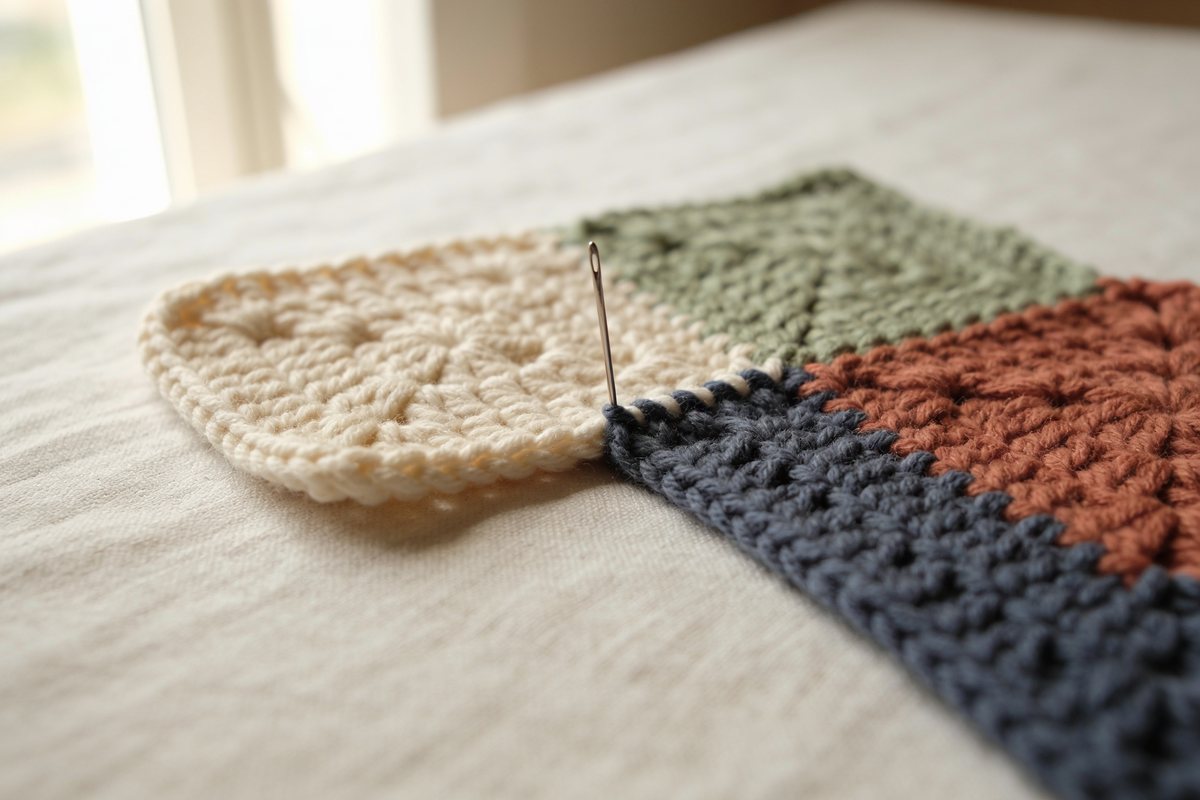
Whip stitch with a needle
EasySlowest
Sewn through the back loops with the same yarn as the final round. Nearly invisible, lies completely flat, and takes the longest. The right answer for anything you want to look bought.

Mattress stitch
IntermediateSlowest
Sewn, and entirely invisible from the front. Fiddlier than whip stitch for a marginal gain.

Slip stitch join
BeginnerFast
Worked with a hook through both squares. Fast, flat, and leaves a very slight ridge on the back only.
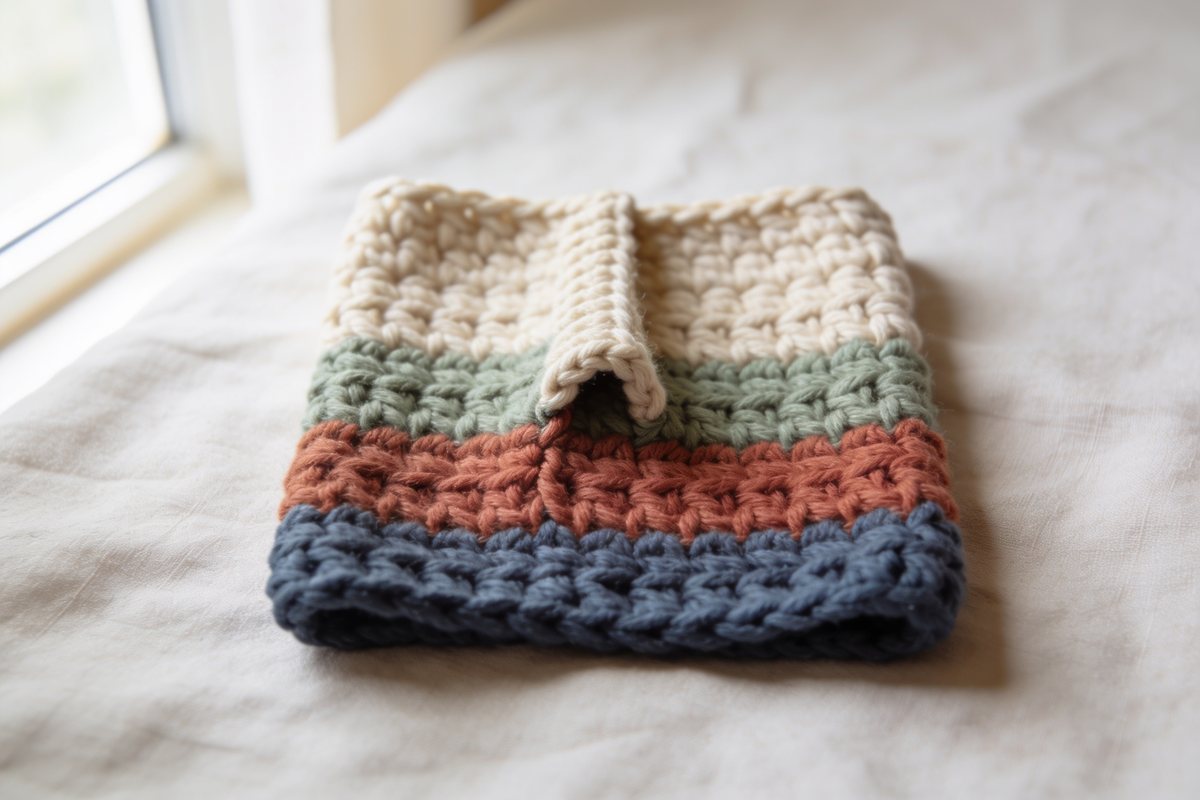
Single crochet join
BeginnerFast
Leaves a raised ridge on whichever side you work it. Done on the front deliberately it becomes a design feature, which is how most vintage blankets look.

Join as you go
IntermediateFastest overall
Each square attaches during its own final round, so there is no separate joining stage. The fastest route to a finished blanket and the hardest to change your mind about.

Flat braid join
IntermediateSlow
Chains worked between squares leave a lacy lattice. Decorative, uses more yarn, and makes the blanket noticeably larger.
Compared
| Method | Visible? | Lies flat | Time for 60 squares | Extra yarn |
|---|---|---|---|---|
| Whip stitch | Barely | Yes | 6 hours | Minimal |
| Mattress stitch | No | Yes | 7 hours | Minimal |
| Slip stitch | Slight ridge, back | Yes | 4 hours | Some |
| Single crochet | Clear ridge | Mostly | 4 hours | Some |
| Join as you go | Slight | Yes | None, it is built in | Minimal |
| Flat braid | Very | Yes | 8 hours | Considerable |
Lay every square out on the floor and photograph the arrangement before joining anything. You will move squares around for twenty minutes and then forget the order the moment you pick them up.
Weave in each square ends as you finish that square. Twenty seconds each is nothing. Two hundred and forty of them in one sitting at the end is how a finished blanket ends up in a bag for a year.
Questions
What is the neatest way to join granny squares?
Whip stitch with a yarn needle in the same colour as the final round. It nearly disappears and lies completely flat.
What is the fastest way to join granny squares?
Join as you go, because there is no separate joining stage at all. Of the after-the-fact methods, slip stitch is quickest.
Should I join with a hook or a needle?
Hook for speed, needle for neatness. On a blanket that will be seen close up, the needle is worth the extra two hours.
Do I join squares right sides together?
For whip stitch and mattress stitch, yes. For single crochet, it depends whether you want the ridge on the front or the back.
How much extra yarn does joining take?
Around 10 percent of the blanket total for sewn joins, up to 25 percent for a flat braid join.
Can I join squares of slightly different sizes?
Small differences block out in wool. In acrylic they do not, so measure one square against the first every ten squares as you go.